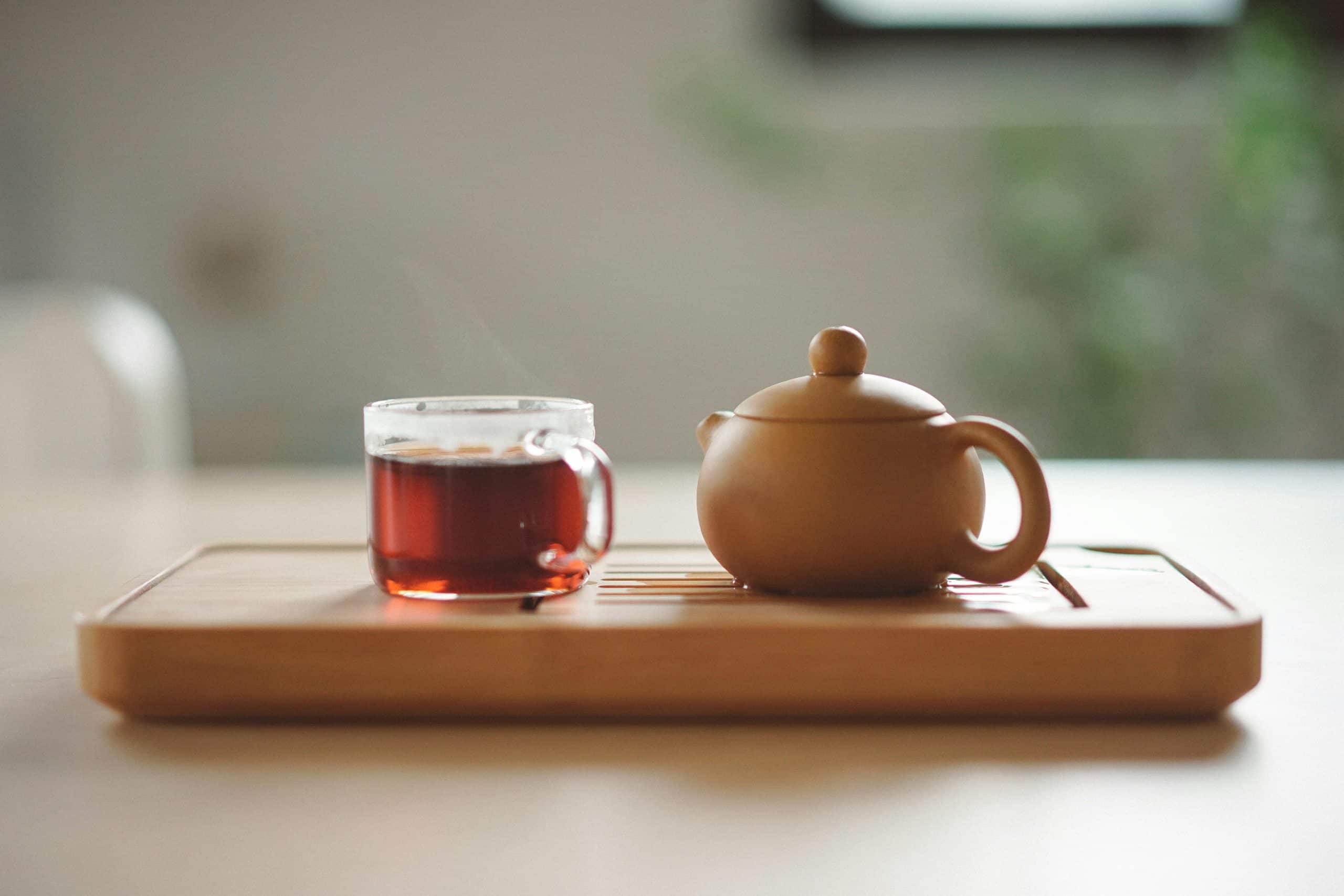
Most yerba mate tea benefits don’t hold up in trials: across 13 studies, it didn’t clearly lower cholesterol, blood sugar or weight.
Its one sure effect comes from caffeine, and its one well-documented risk comes from drinking it very hot.
Here’s how each of the yerba mate tea benefits looks once you check the studies. You’ll also see how mate compares with the herbal teas worth knowing about.
- A 2025 review of 13 trials found yerba mate didn’t clearly change cholesterol, fasting blood sugar or BMI.
- Only 3 of those 13 trials gave mate as a drink. The rest used capsules or tablets.
- Mate has caffeine at levels similar to tea and coffee. Only 1 published case links it to liver injury, and no rigorous trial shows it boosts focus.
- A 2016 expert review classed drinks above 65°C (149°F) as probably carcinogenic. Mate is traditionally drunk at about 70°C.
- In South American studies of 1,400 people with esophageal cancer, risk rose with how hot people drank their mate, not just how much.
Which yerba mate tea benefits hold up?
Yerba mate is made from the dried leaves of Ilex paraguariensis, a South American holly. It’s traditionally sipped from a gourd through a metal straw, and unlike most herbal teas, it has caffeine.
Of the yerba mate tea benefits people claim most, only the energy lift has a clear cause. In contrast, the metabolic claims faded once the trials were pooled.
That said, keep one thing in mind as you read. Most of the trials gave people capsules or tablets, so they tell you even less about a cup of mate.
| Claim | What the trials used | Grade |
|---|---|---|
| Energy and focus | Mostly caffeine evidence, not mate trials | Low |
| Lower cholesterol | Mostly capsules and tablets; 3 drink trials | Low |
| Lower blood sugar | Mostly capsules and tablets | Low |
| Weight and belly fat | Mostly capsules and tablets | Low |
1. Energy and focus
Mate wakes you up because it has caffeine. In fact, mate drinks typically have caffeine levels similar to tea and coffee.
However, no rigorous, well-powered trial has shown that mate itself improves vitality or concentration.
As a result, there’s no evidence that mate gives a “smoother” or longer energy curve than coffee.
Verdict: Low
for any mate-specific effect. The lift you feel is most likely the caffeine.
2. Lower cholesterol
The 2025 review of 13 trials found no clear change in total or LDL (“bad”) cholesterol. Both results were rated low certainty, and the trials disagreed a lot.
Similarly, HDL (“good”) cholesterol didn’t change.
In addition, most of those trials used capsules or tablets, not the drink.
Verdict: Low
The trials don’t show a reliable cholesterol drop, so mate is no swap for cholesterol medicine.
3. Lower blood sugar
Fasting blood sugar didn’t change across 7 trials in the same review. Long-term blood sugar (HbA1c) and after-meal blood sugar did fall, but only in 2 trials from one research team.
However, results that come from a single group need checking by others before anyone can count on them.
Verdict: Low
The signal is too thin to rely on, and mate can’t replace diabetes care.
4. Weight and belly fat
BMI didn’t change across 7 trials, and the 2025 review of mate trials rated that result high certainty. Waist results were mixed.
Also, a small 12-week trial of mate extract in 30 adults with obesity found no difference in body weight compared with placebo. Body fat percentage and waist-to-hip ratio fell slightly more than with placebo, but the trial was small and partly funded by the mate supplier.
Overall, the evidence points to no real weight effect, at least from capsules and tablets. Weight loss is one of the yerba mate tea benefits people search for most, yet it’s among the weakest.
Verdict: Low
Yerba mate isn’t shown to burn belly fat or help weight loss.
Does drinking yerba mate hot raise cancer risk?
The concern is the temperature, not the leaf. In 2016, an expert review of very hot drinks classed drinking very hot beverages, above 65°C (149°F), as probably carcinogenic.
That rests on limited human evidence. It links very hot drinks to cancer of the esophagus, the tube from your throat to your stomach.
Mate is traditionally drunk at about 70°C (158°F). By contrast, the same review put mate that isn’t drunk very hot in Group 3, which means the evidence can’t say either way.
The evidence behind this is mostly case-control studies, where people with cancer are compared with people without it.
- A pooled analysis of 1,400 cases from four South American countries linked mate drinking with higher odds of esophageal cancer.
- In that study, the odds rose faster for very hot mate than for hot or warm mate.
- A 2022 meta-analysis of 23 reports found that drinking tea at higher temperatures was linked to 79% higher odds of esophageal cancer.
Source: Lubin et al., 2014, pooled case-control studies from Argentina, Brazil, Paraguay and Uruguay (1,400 cases, 3,229 controls)
Each bar shows how much the odds rose for each unit of lifetime mate drinking. The warm estimate wasn’t statistically clear. This shows a pattern, not your personal risk.
Still, case-control studies rely on people remembering how hot they drank their mate. They also can’t fully rule out smoking and alcohol, which raise the same cancer risk.
Even so, animal studies point the same way. In the studies that review weighed, very hot water promoted esophageal tumors in rats and mice, while mate itself didn’t.
What this means for you: if you drink mate, the evidence points to the temperature as the thing to watch, not mate itself. None of the yerba mate tea benefits outweighs drinking it scalding hot.
| What the evidence links | Grade | What it means |
|---|---|---|
| Very hot drinks (above 65°C) and esophageal cancer | Moderate | Consistent link in case-control studies; classed as a probable cause in 2016 |
| Mate drunk warm or cold and cancer | Low | No clear link; the evidence can’t classify it |
Is it safe to drink yerba mate every day?
For most healthy adults, mate is a caffeinated drink with the usual caffeine cautions. Still, too much caffeine can cause a fast heartbeat, jitters, trouble sleeping and an upset stomach.
If you’re pregnant, breastfeeding or take certain medicines, talk with a provider about caffeine.
In the 2025 review, side effects reported in trials included stomach irritation, trouble sleeping, nausea, heartburn, a fast heartbeat and headache.
If you’re choosing between caffeinated drinks, see how green tea compares and what coffee does for your health. For less caffeine, try these caffeine-free coffee alternatives.
Can yerba mate hurt your liver? Rarely.
Only one published case links mate to liver injury: a young man developed jaundice and itching after drinking mate daily for 4 months. His liver recovered within 2 months of stopping.
Mate extract is also an ingredient in some weight-loss supplements, which can contain other herbs.
The grade for this evidence is Low, since it rests on a single case report. In other words, the risk is real but appears to be very rare.
For a wider look at liver care, see how to keep your liver healthy.
If your skin or eyes turn yellow while you drink mate or take a supplement with mate in it, stop and see a doctor.
When to see a doctor
Mate rarely causes serious problems, but a few symptoms need checking.
Ask for an urgent appointment if:
- Your skin or the whites of your eyes look yellow.
- Your urine is darker than usual. These and yellow skin are signs of jaundice.
- You’re being sick for more than 2 days, or your poop is black or dark red.
See a doctor if:
- You have problems swallowing, or food feels like it sticks.
- You’ve lost a noticeable amount of weight without trying.
- You have heartburn most days for 3 weeks or more, or a hoarse voice or cough that isn’t getting better.
These are known warning signs of esophageal cancer. They’re common and usually have other causes, but they’re worth checking, especially if you’ve drunk very hot mate for years.
Talk to your doctor or pharmacist if:
- You have a racing or pounding heartbeat, shakiness or trouble sleeping, which can be signs of too much caffeine.
- You’re pregnant or breastfeeding, or you take regular medicine and drink mate often.
FAQ
Does yerba mate burn belly fat?
The trials don’t show it. In a 2025 review, BMI didn’t change across 7 trials, rated high certainty, and waist results were mixed. Most trials used capsules or tablets, not the drink.
Which is healthier, green tea or yerba mate?
Green tea has stronger trial evidence, mainly a small drop in LDL cholesterol from extracts. Yerba mate’s metabolic claims didn’t hold up when its trials were pooled. Both have caffeine.
Is yerba mate better than coffee?
Not in any proven way. Both have caffeine, and no trial we found showed mate gives smoother energy. Coffee has a much larger body of research behind it.
What happens if I drink yerba mate every day?
For most healthy adults, you’ll mainly get caffeine. The trials behind yerba mate tea benefits didn’t find clear changes in cholesterol, blood sugar or weight. Drinking it very hot for years is linked to esophageal cancer.
What's the best time to drink yerba mate tea?
No trial has tested timing. Because it has caffeine, it may disturb sleep if you drink it late in the day.
The bottom line
Yerba mate is a caffeinated drink, and the trials so far don’t show that it lowers cholesterol, blood sugar or weight. The energy you feel is most likely the caffeine. The clearest risk is drinking it very hot, which is linked to esophageal cancer.
Sources & References
- Li, D., Yue, L., Peng, X., Chen, L., Lin, T., Huang, L., Liu, Y., Yue, J., & Huang, X. (2025). Yerba maté and its impact on glycemic control and metabolic health: A systematic review and meta-analysis. Frontiers in Endocrinology, 16, 1641592. https://doi.org/10.3389/fendo.2025.1641592
Evidence: Low. For the drink’s claims: meta-analysis of 13 randomized trials, only 3 of them testing mate as a drink (5 capsule, 5 tablet); most outcomes low certainty with high heterogeneity; the BMI result was high certainty but came mostly from capsule and tablet trials; HbA1c and after-meal glucose from 2 trials by one team. Funding: Chinese provincial and city government research grants (Sichuan, Xiamen); no commercial funding declared. - Kim, S.-Y., Oh, M.-R., Kim, M.-G., Chae, H.-J., & Chae, S.-W. (2015). Anti-obesity effects of Yerba Mate (Ilex paraguariensis): A randomized, double-blind, placebo-controlled clinical trial. BMC Complementary and Alternative Medicine, 15, 338. https://doi.org/10.1186/s12906-015-0859-1
Evidence: Low. Randomized double-blind trial, 30 adults with obesity (25 finished), 12 weeks, mate extract capsules vs placebo; no difference in body weight; small falls in body fat mass, percent body fat and waist-to-hip ratio vs placebo. Funding: Jeju MICE project grant (Korean Ministry of Knowledge Economy) and Bluegreenlink Co., Ltd., which supplied the mate. DHB note: older than our usual 2018 cutoff, but it is the only placebo-controlled weight trial of mate extract we found to cite here. - Lubin, J. H., De Stefani, E., Abnet, C. C., Acosta, G., Boffetta, P., Victora, C., Graubard, B. I., Muñoz, N., Deneo-Pellegrini, H., Franceschi, S., Castellsagué, X., Ronco, A. L., & Dawsey, S. M. (2014). Maté drinking and esophageal squamous cell carcinoma in South America: Pooled results from two large multicenter case-control studies. Cancer Epidemiology, Biomarkers & Prevention, 23(1), 107-116. https://doi.org/10.1158/1055-9965.EPI-13-0796
Evidence: Moderate. Pooled case-control studies (1,400 cases, 3,229 controls); odds ratio 1.60 for ever versus never mate use; risk slope rose with drinking temperature. Observational, so Moderate at most. Funded by IARC, the European Commission, the US National Cancer Institute and South American and Spanish public research funds; no industry funding. DHB note: older than our usual 2018 cutoff, but it is the main pooled mate analysis behind the standing IARC evaluation. - Luo, H., & Ge, H. (2022). Hot tea consumption and esophageal cancer risk: A meta-analysis of observational studies. Frontiers in Nutrition, 9, 831567. https://doi.org/10.3389/fnut.2022.831567
Evidence: Moderate. Meta-analysis of 23 observational reports (5,050 cases, 10,609 controls); odds ratio 1.79 for drinking tea at higher temperature. Observational, so Moderate at most. Funding: National Natural Science Foundation of China and the Henan provincial science plan; no commercial funding. - Loomis, D., Guyton, K. Z., Grosse, Y., Lauby-Secretan, B., El Ghissassi, F., Bouvard, V., Benbrahim-Tallaa, L., Guha, N., Mattock, H., Straif, K., & International Agency for Research on Cancer Monograph Working Group. (2016). Carcinogenicity of drinking coffee, mate, and very hot beverages. The Lancet Oncology, 17(7), 877-878. https://doi.org/10.1016/S1470-2045(16)30239-X
Evidence: Reference source. Summary of the standing IARC classification (very hot beverages Group 2A; mate not drunk very hot Group 3); it carries the grade of the case-control studies above. DHB note: older than our usual 2018 cutoff, but it is the current classification and has not been revised. - International Agency for Research on Cancer. (2016). Q&A on Monographs Volume 116: Coffee, maté, and very hot beverages. World Health Organization. https://www.iarc.who.int/wp-content/uploads/2018/11/Monographs-QA_Vol116.pdf
Evidence: Reference source. Definition of very hot (65°C or above), the evidence base (nine South American case-control studies) and the animal findings (very hot water, not mate, promoted esophageal tumors). DHB note: older than our usual 2018 cutoff, but it explains the standing IARC classification. - International Agency for Research on Cancer. (2016, June 15). IARC Monographs evaluate drinking coffee, maté, and very hot beverages (Press release No. 244). https://www.iarc.who.int/wp-content/uploads/2018/07/pr244_E.pdf
Evidence: Reference source. Traditional mate drinking temperature (about 70°C) and the Group 3 rating for mate that isn’t drunk very hot. - National Institute of Diabetes and Digestive and Kidney Diseases. (2024, November 10). Yerba mate. In LiverTox: Clinical and research information on drug-induced liver injury. National Library of Medicine. https://www.ncbi.nlm.nih.gov/books/NBK610218/
Evidence: Reference source. Federal drug-injury database, not graded; the liver injury evidence it lists is a single case report (likelihood score D, possible but rare). Used for caffeine content, the unproven vitality claims and its summary of a 12-week extract trial (Kim 2015) with no weight difference. - U.S. Food and Drug Administration. (2024, August 28). Spilling the beans: How much caffeine is too much? https://www.fda.gov/consumers/consumer-updates/spilling-beans-how-much-caffeine-too-much
Evidence: Reference source. Signs of too much caffeine; advice for pregnancy, breastfeeding and people on certain medicines. - National Health Service. (2023, June 29). Symptoms of oesophageal cancer. https://www.nhs.uk/conditions/oesophageal-cancer/symptoms/
Evidence: Reference source. Symptoms and when to see a GP or get urgent advice (page review was due June 2026; recheck before publishing). - National Health Service. (2024, January 22). Jaundice. https://www.nhs.uk/conditions/jaundice/
Evidence: Reference source. Signs of jaundice and when to get urgent advice (next review due January 2027).
How We Reviewed This Article
We rank evidence before we write. Systematic reviews, meta-analyses, and randomized controlled trials carry the most weight. Smaller trials and observational studies get cited with appropriate caveats. Consumer-perception surveys and industry-funded work get flagged as such. Every source in the References section above is tagged with its evidence strength, so you can see the grade for yourself.
Medical Disclaimer
This article is for informational purposes only and does not constitute medical advice. Always consult a qualified healthcare provider before making changes to your diet, exercise routine, or supplement regimen. Daily Healthy Body does not provide medical diagnoses or treatment recommendations.