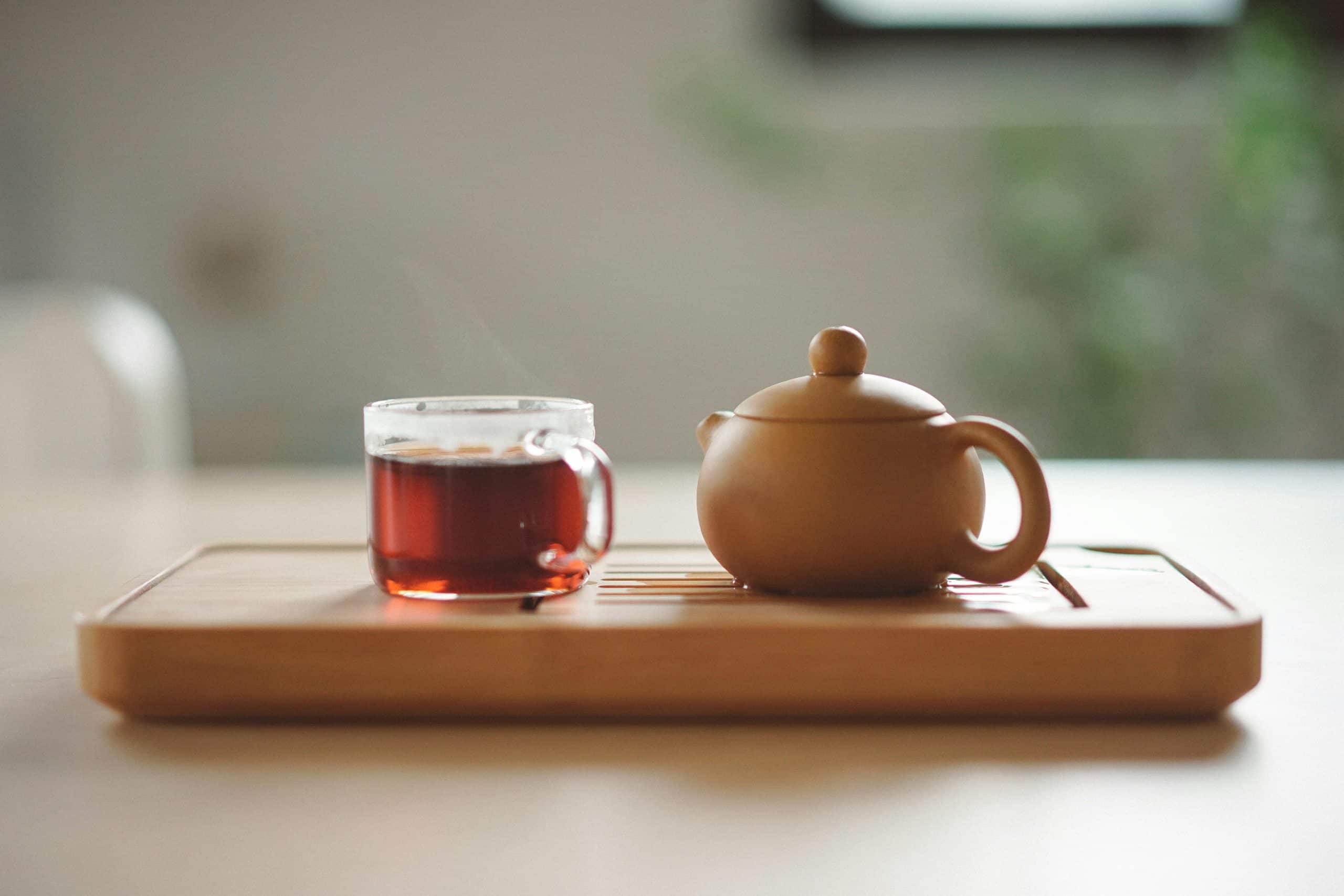
The best herbal teas, by the evidence, are ginger, hibiscus, chamomile and lemon balm. Hibiscus lowered systolic pressure by about 7 points versus placebo in a review of 17 trials.
But several of these results came from extracts or capsules, not a cup of tea.
That’s the catch with herbal teas.
So below, you’ll see each tea graded by its research, plus what the trials tested.
If you’re comparing teas with other home options, see natural remedies and how they rate.
- Hibiscus lowered systolic blood pressure by 7.1 mmHg versus placebo in a meta-analysis of 17 trials, though results varied a lot between trials.
- Ginger’s best evidence is for nausea in pregnancy, rated high certainty across 24 reviews. Most of those trials used capsules, not tea.
- Peppermint oil capsules beat placebo for IBS in 10 trials of 1,030 people. Peppermint tea itself hasn’t been tested that way.
- Chamomile improved a sleep-quality score by 1.88 points versus control groups in 5 pooled studies, but didn’t change how long people slept or how they felt the next day.
- Only 4 of the 10 teas we graded reach Moderate or Strong. Peppermint’s trials are low quality, and fennel, rooibos, spearmint, valerian and turmeric tea have weak evidence so far.
Which are the best herbal teas, ranked by evidence?
The best herbal teas for health are ginger, hibiscus, chamomile and lemon balm. Each has randomized trials behind one specific use. Peppermint comes next, with low-quality trials, and five other popular teas have only weak or no evidence.
Several strong results came from capsules rather than brewed tea.
| Tea | Grade | Best-supported use, and what was tested |
|---|---|---|
| 1. Ginger | Strong | Nausea in pregnancy. Mostly capsules |
| 2. Hibiscus | Moderate | Blood pressure. Includes trials against other teas |
| 3. Chamomile | Moderate | Sleep quality. Form not separated in the review |
| 4. Lemon balm | Moderate | Anxiety and low mood. Form not reported |
| 5. Peppermint | Low | IBS symptoms. Oil capsules, not tea |
| 6. Fennel | Low | Period pain. Small, imprecise results |
| 7. Rooibos | Low | Heart and blood sugar markers. Brewed tea, tiny studies |
| 8. Spearmint | Low | Hormone levels in PCOS. One 30-day trial of brewed tea |
| 9. Valerian | Low | Insomnia. No proven effect |
| 10. Turmeric | Low | Inflammation. Trials used extract capsules |
Here’s how to read the grades on these best herbal teas.
Strong means several reviews of randomized trials agree. Moderate means trials point the same way but are small or inconsistent.
Low means the evidence is thin, early or mixed.
1. Ginger (nausea)
Ginger has the strongest single result of all the best herbal teas, but there’s a twist.
An umbrella review of 24 systematic reviews rated its effect on nausea in pregnancy as large, with high certainty.
However, most of those trials gave ginger as capsules, not tea. The same review found weaker, less certain evidence for chemotherapy nausea, period pain and blood sugar.
A cup of ginger tea hasn’t been tested the same way.
So it may help a queasy stomach, but nobody knows how much ginger a cup delivers. For more, see ginger tea health benefits.
Verdict: Strong
Ginger capsules reliably ease pregnancy nausea. Ginger tea is a reasonable thing to try, but it hasn’t been studied as a tea.
2. Hibiscus (blood pressure)
Hibiscus is the clearest winner among the best herbal teas.
A 2022 meta-analysis of 17 trials found systolic pressure fell 7.10 mmHg versus placebo. The biggest drops came in people whose pressure started high.
In head-to-head trials, hibiscus did about as well as blood pressure medicine.
It also lowered LDL cholesterol a little compared with other teas and placebo.
What’s more, a 2025 update of 26 trials with 1,797 people pointed the same way. It found only a minor, harmless change in one liver enzyme.
Still, the trials varied a lot in how big the effect was. Some compared hibiscus with other teas, so part of this evidence comes from brewed tea.
For the full picture, read our page on hibiscus tea health benefits.
Verdict: Moderate
Hibiscus may lower blood pressure a little, especially if yours is high, but it isn’t a replacement for medicine. Ask your doctor before adding it if you already take blood pressure pills.
3. Chamomile (sleep)
Chamomile is the classic bedtime tea, and the research backs it a little.
A 2024 meta-analysis of 10 studies with 772 people found better sleep-quality scores. Pooled from 5 of the studies, scores improved by 1.88 points versus control groups.
But sleep length, sleep efficiency and daytime tiredness didn’t improve.
In addition, only one study checked the purity or strength of its chamomile product.
The review’s summary doesn’t say which studies used brewed tea.
One plus is that no study reported side effects, although most only watched for them passively.
Verdict: Moderate
Chamomile may help you feel you slept a bit better. It won’t fix insomnia, and anyone allergic to ragweed should be careful.
4. Lemon balm (stress and mood)
Lemon balm is a mint-family herb people drink to unwind, and it just makes the list of the best herbal teas.
A 2021 meta-analysis of lemon balm trials found it improved anxiety and depression scores compared with placebo, without serious side effects.
However, the number of trials was small, and their results varied a lot. The review doesn’t report how many used tea rather than capsules or extracts.
So the effect looks real but uncertain.
Our page on lemon balm tea benefits goes into more detail.
Verdict: Moderate
Lemon balm may ease mild anxiety and low mood. It’s no substitute for care if your mood is affecting daily life.
5. Peppermint (IBS and gut cramps)
Peppermint’s evidence is real, but it’s almost all about the oil.
In a meta-analysis of 10 trials with 1,030 people, peppermint oil capsules eased IBS symptoms better than placebo.
For every 4 people treated, about 1 more improved than on placebo.
However, side effects were more common, and the authors rated the evidence quality as very low.
A 2026 meta-analysis of plant-based IBS treatments came to the same answer. Peppermint oil beat placebo across 7 trials, though many studies were of limited quality.
Peppermint tea, on the other hand, hasn’t been tested for IBS.
No trial has tested peppermint tea for IBS or for safety. In the oil capsule trials, side effects were more common than with placebo. For the tea itself, see peppermint tea and your gut.
Verdict: Low
Peppermint oil capsules beat placebo for IBS, but the trials are low quality, so we grade them Low. The tea is soothing for many people, but it’s untested.
6. Fennel (period pain)
Fennel shows up in many period-pain remedies.
In a 2020 meta-analysis of 9 small trials with 647 people, cinnamon, fennel and ginger all eased period pain versus placebo.
But the fennel result was small and very imprecise.
And it isn’t clear from the review whether any trial used brewed fennel tea.
For bloating, which is fennel’s other big claim, we found no good trials.
See fennel tea benefits for what’s known.
Verdict: Low
Fennel might help period pain a little, but the evidence is thin and unclear for the tea.
7. Rooibos (heart and blood sugar markers)
Rooibos is a red, caffeine-free tea from South Africa.
A 2023 scoping review of rooibos in humans found just 18 studies with 488 people in total.
Those studies suggested better cholesterol, antioxidant levels and blood sugar.
Still, they were small, and they used many types and amounts of tea.
Most of what you’ll read about rooibos comes from animal and lab studies, not people.
Verdict: Low
Rooibos is a good caffeine-free choice, but its health benefits aren’t proven yet.
8. Spearmint (hormones in PCOS)
Spearmint tea gets talked about for hormonal acne and excess hair.
The main study is a 2010 trial of 42 women with PCOS that ran for 30 days.
Testosterone levels fell in the spearmint group, and the women felt their hair growth had improved.
But a doctor’s rating of hair growth didn’t change significantly.
That’s one small, short trial.
For more, see spearmint tea and hormones.
Verdict: Low
Spearmint lowered a hormone in one small study. That’s not enough to call it a treatment for PCOS.
9. Valerian (insomnia)
Valerian has a big reputation as a sleep herb.
Yet a 2024 umbrella review of valerian for insomnia found no evidence it treats insomnia.
People did report better sleep quality in some studies. However, that didn’t show up in objective measures, and the studies were few and of low quality.
Valerian looked safe in these reviews.
Verdict: Low
Valerian may make sleep feel a little better, but it hasn’t been shown to treat insomnia.
10. Turmeric tea (inflammation)
Turmeric tea sounds like an easy way to get curcumin, but there’s a problem.
Curcuminoids, the group that includes curcumin, make up only 1% to 6% of turmeric by weight. And the body absorbs curcumin poorly, a 2019 review of absorption studies found.
The trials that showed benefits used concentrated extract capsules.
Turmeric supplements, some with added black pepper extract, have also been linked to rare liver injury, as in 10 confirmed US liver injury cases.
So a mug of turmeric tea is fine as a drink, but don’t expect trial results from it. See what turmeric and curcumin can do for the supplement evidence.
Verdict: Low
Turmeric tea is pleasant and likely harmless, but no trial shows it does what extracts do.
Green tea comes from the tea plant itself, so it isn’t an herbal tea. In a meta-analysis of 9 trials in 680 healthy adults, it lowered systolic pressure by about 3 points versus control groups. Read more on green tea benefits.
What are the health benefits of herbal tea?
Herbal tea benefits are real but narrow. The best evidence covers nausea (ginger), blood pressure (hibiscus), sleep quality (chamomile) and mild anxiety (lemon balm). Peppermint oil for IBS has trials, but they’re low quality.
Claims about blood sugar, colds and weight loss rest on only a few small trials.
Here’s each common claim, matched to the best herbal teas for that use, with grades.
- Nausea: ginger, graded Strong, though most trials used capsules.
- Blood pressure: hibiscus, graded Moderate. It has the clearest measured effect of any herbal tea.
- Sleep quality: chamomile, graded Moderate. A brewed-tea trial in 80 new mothers beat usual care on one sleep-problem scale and on depression, then faded.
- Anxiety and low mood: lemon balm, graded Moderate.
- IBS and gut cramps: peppermint, graded Low, for the oil capsules rather than the tea. The trials are real but low quality.
- Blood sugar: chamomile, graded Low. A 2024 meta-analysis of 4 trials found lower fasting blood sugar and HbA1c than control groups.
- Colds and flu: echinacea tea, graded Low. In a 2000 trial of 95 people, it eased symptoms faster than a placebo.
- Weight loss: Low. The most-quoted study (a 2002 study of 35 adults) had no comparison group, and the tea’s maker ran it.
HbA1c is a blood test that shows your average blood sugar over the past few months.
So the blood sugar and cold results are worth knowing, but they’re early. Here’s what else eases a cold, by the evidence.
Do the best herbal teas work as brewed tea or only as extracts?
Often they don’t. The best results for ginger, peppermint and turmeric came from capsules, oils or extracts. Rooibos, spearmint and some hibiscus trials used brewed tea.
That matters because a cup you make at home isn’t standardized.
Its strength depends on the plant, the amount and how long it steeps.
So when you read that a tea “works”, ask what was actually tested.
A capsule result tells you the plant can do something. It doesn’t tell you a cup will.
That’s why each tea above says what form the trials used.
Which herbal teas can interact with medicines?
Most herbal teas, including the best herbal teas above, are likely safe for most people.
However, a few can interact with medicines, especially blood thinners and blood pressure drugs.
A 2021 review of warfarin interactions named chamomile tea, ginger and green tea among the foods and herbs linked to more bleeding. Most of that evidence comes from case reports, so the risk is uncertain but worth knowing.
Licorice root is another one to watch.
In a meta-analysis of 8 licorice trials, products high in glycyrrhizic acid raised systolic pressure by about 3.5 points versus control groups. If you take blood pressure medicine, read about licorice root tea benefits before drinking it often.
In addition, chamomile can cause allergic reactions in people allergic to ragweed. If you’re pregnant or breastfeeding, check with your prenatal provider before using any tea as a remedy.
And peppermint oil can cause heartburn.
Free for subscribers
Join our Sunday email and get the Herbal Tea and Medicines Checklist as a one-page PDF, plus every other Daily Healthy Body printable. Check which herbal teas can affect your medicines.
Where should you go next?
This page covers the best herbal teas with real research.
If you want a specific tea, these pages go deeper.
| Tea | In one line | Read more |
|---|---|---|
| Rose | What research says about periods, mood and skin. | rose tea health benefits |
| Lemongrass | What the research supports, and what it doesn’t. | lemongrass tea health benefits |
| Ginseng | Asian and American ginseng, and what each does. | ginseng tea health benefits |
| Rosehip | Vitamin C, joints and what the research shows. | rosehip tea health benefits |
| White tea | A gentler cousin of green tea, from the tea plant. | white tea health benefits |
| Teas for stomach pain | Which teas people reach for, and what’s known. | teas for an upset stomach |
| All the types | A plain reference list of herbal teas and their uses. | types of herbal tea and their uses |
Not a tea drinker? See our pages on coffee health benefits, coffee alternatives, yerba mate tea benefits, Ceylon tea and drinking water benefits. We also cover tonic water, drinking wine every day and whether a juice cleanse is worth it.
Pregnant and thinking about it? Read what the research says about raspberry leaf tea in pregnancy first.
When to see a doctor
See a doctor rather than relying on even the best herbal teas if you have any of these:
- Sudden chest pain that doesn’t go away, or chest pain with sweating or shortness of breath: call 911 for this chest pain
- High blood pressure with frequent headaches or blurred vision, or chest pain that comes and goes
- Blood in your poop or weight loss without trying, or bowel changes that aren’t usual for you
- Trouble sleeping for months, or poor sleep that makes daily life hard to cope with
- Lips, mouth, throat or tongue suddenly swelling, or struggling to breathe after a tea: these are anaphylaxis signs, so get emergency help
- In pregnancy, being unable to keep food or fluids down for 24 hours
FAQ
What is the healthiest herbal tea?
Hibiscus has the clearest measured effect. A 2022 meta-analysis of 17 trials found it lowered systolic blood pressure by 7.1 mmHg versus placebo, most in people with high pressure. The trials varied a lot, so we grade it Moderate.
Which herbal tea is best for sleep?
Chamomile has the most research. A 2024 meta-analysis found better sleep-quality scores but no change in how long people slept. Valerian is popular, but a 2024 umbrella review found no proof it treats insomnia.
Does peppermint tea help IBS?
The evidence is for peppermint oil capsules, which beat placebo in 10 trials of 1,030 people, though the trials are low quality. Peppermint tea hasn’t been tested the same way. It’s soothing for many people, but untested for IBS.
Are herbal teas safe to drink every day?
Most are likely safe for most people. A few interact with medicines: chamomile, ginger and green tea are linked to warfarin interactions, and licorice can raise blood pressure. Ask your pharmacist if you take regular medicine.
Is green tea an herbal tea?
No. Green tea comes from the tea plant, so it’s a true tea with caffeine. A meta-analysis of 9 trials in healthy adults found it lowered systolic pressure by about 3 points versus control groups.
The bottom line
The best herbal teas, by the evidence, are ginger, hibiscus, chamomile and lemon balm. Rooibos, spearmint and some hibiscus trials used brewed tea, but the strongest results for ginger and peppermint came from capsules.
Pick a tea you enjoy, and check with your pharmacist before using one alongside regular medicine.
Sources & References
- Ellis, L. R., Zulfiqar, S., Holmes, M., Marshall, L., Dye, L., & Boesch, C. (2022). A systematic review and meta-analysis of the effects of Hibiscus sabdariffa on blood pressure and cardiometabolic markers. Nutrition Reviews, 80(6), 1723-1737. https://doi.org/10.1093/nutrit/nuab104
Evidence: Moderate. Systematic review and meta-analysis of 17 randomized trials in adults; very high heterogeneity (I² = 95%). Funding: University of Leeds scholarship and a BBSRC research council award; no industry funding. - Norouzzadeh, M., Hasan Rashedi, M., Azizi, M. H., Teymoori, F., Maghsoomi, Z., & Shidfar, F. (2025). Efficacy and safety of Hibiscus sabdariffa in cardiometabolic health: An overview of reviews and updated dose-response meta-analysis. Complementary Therapies in Medicine, 89, 103135. https://doi.org/10.1016/j.ctim.2025.103135
Evidence: Moderate. Umbrella review with an updated meta-analysis of 26 randomized trials (n=1,797); effects consistent in direction, credibility rated moderate. Funded by Iran University of Medical Sciences. - Crichton, M., Davidson, A. R., Innerarity, C., Marx, W., Lohning, A., Isenring, E., & Marshall, S. (2022). Orally consumed ginger and human health: An umbrella review. The American Journal of Clinical Nutrition, 115(6), 1511-1527. https://doi.org/10.1093/ajcn/nqac035
Evidence: Strong. Umbrella review of 24 systematic reviews; nausea in pregnancy rated high certainty (GRADE); most trials used capsules, other outcomes very low to moderate certainty. Funding: Australian Government Research Training Program Scholarship. - Ingrosso, M. R., Ianiro, G., Nee, J., Lembo, A. J., Moayyedi, P., Black, C. J., & Ford, A. C. (2022). Systematic review and meta-analysis: Efficacy of peppermint oil in irritable bowel syndrome. Alimentary Pharmacology & Therapeutics, 56(6), 932-941. https://doi.org/10.1111/apt.17179
Evidence: Low. Meta-analysis of 10 randomized trials (n=1,030) of peppermint oil capsules, not tea; the authors rate the quality of evidence very low, so we grade it Low; more side effects than placebo. Funding: unknown. - Meyer, A., Auer, J., Cascant-Ortolano, L., Schreiber, N., Zimmermann-Klemd, A., Gründemann, C., Busche, P., Schirra, J., & Fox, M. R. (2026). Systematic review and meta-analysis: Plant-based therapy for irritable bowel syndrome. Phytotherapy Research, 40(10), 5918-5950. https://doi.org/10.1002/ptr.70421
Evidence: Low. For peppermint oil: systematic review of 60 studies (n=6,329) with a meta-analysis of 7 peppermint oil trials; the authors say the quality of many studies was limited and give no formal certainty rating, and its trials overlap reference 4, rated very low. Funding: unknown. - Kazemi, A., Shojaei-Zarghani, S., Eskandarzadeh, P., & Hashempur, M. H. (2024). Effects of chamomile (Matricaria chamomilla L.) on sleep: A systematic review and meta-analysis of clinical trials. Complementary Therapies in Medicine, 84, 103071. https://doi.org/10.1016/j.ctim.2024.103071
Evidence: Moderate. Systematic review of 10 small clinical trials (n=772), sleep-quality score pooled from 5; high heterogeneity (I² = 88%); only one study tested product purity. Funding: unknown. - Ghazizadeh, J., Sadigh-Eteghad, S., Marx, W., Fakhari, A., Hamedeyazdan, S., Torbati, M., Taheri-Tarighi, S., Araj-Khodaei, M., & Mirghafourvand, M. (2021). The effects of lemon balm (Melissa officinalis L.) on depression and anxiety in clinical trials: A systematic review and meta-analysis. Phytotherapy Research, 35(12), 6690-6705. https://doi.org/10.1002/ptr.7252
Evidence: Moderate. Meta-analysis of a small number of randomized trials; high heterogeneity; form of lemon balm not reported in the abstract. Funding: unknown. - Xu, Y., Yang, Q., & Wang, X. (2020). Efficacy of herbal medicine (cinnamon/fennel/ginger) for primary dysmenorrhea: A systematic review and meta-analysis of randomized controlled trials. Journal of International Medical Research, 48(6), 300060520936179. https://doi.org/10.1177/0300060520936179
Evidence: Low. Meta-analysis of 9 small trials (n=647) across three herbs; the fennel estimate is small and very imprecise; tea use unclear. Funding: none (no specific grant). - Afrifa, D., Engelbrecht, L., Op’t Eijnde, B., & Terblanche, E. (2023). The health benefits of rooibos tea in humans (Aspalathus linearis): A scoping review. Journal of Public Health in Africa, 14(12), 2784. https://doi.org/10.4081/jphia.2023.2784
Evidence: Low. Scoping review of 18 small human studies (n=488 in total); no pooled analysis; tea types and amounts varied. Funding: unknown. - Grant, P. (2010). Spearmint herbal tea has significant anti-androgen effects in polycystic ovarian syndrome: A randomized controlled trial. Phytotherapy Research, 24(2), 186-188. https://doi.org/10.1002/ptr.2900
Evidence: Low. Single randomized trial, n=42 women with PCOS, 30 days; hormone levels changed, the objective hirsutism score didn’t. Funding: unknown. DHB note: older than our usual 2018 cutoff, but it’s still the only randomized trial of spearmint tea in PCOS we found. - Valente, V., Machado, D., Jorge, S., Drake, C. L., & Marques, D. R. (2024). Does valerian work for insomnia? An umbrella review of the evidence. European Neuropsychopharmacology, 82, 6-28. https://doi.org/10.1016/j.euroneuro.2024.01.008
Evidence: Low. Umbrella review of 8 systematic reviews; underlying trials few, heterogeneous and of low methodological quality; no evidence of effect on insomnia. Funding: none. - National Institute of Diabetes and Digestive and Kidney Diseases. (2025). Turmeric. In LiverTox: Clinical and research information on drug-induced liver injury. National Library of Medicine. https://www.ncbi.nlm.nih.gov/books/NBK548561/
Evidence: Reference source. Federal liver-injury reference (updated June 16, 2025); background only. Curcumin content, absorption and liver injury on this page come from Dei Cas 2019 and the DILIN case series. - Yıldırım Ayaz, E., Dinçer, B., & Mesci, B. (2023). Effect of green tea on blood pressure in healthy individuals: A meta-analysis. Alternative Therapies in Health and Medicine, 29(5), 66-73. https://pubmed.ncbi.nlm.nih.gov/36689359/
Evidence: Moderate. Meta-analysis of 9 randomized trials (n=680) in healthy adults; consistent results (I² = 0%) but a smaller journal and short trials. Funding: unknown. - Tan, C. S. S., & Lee, S. W. H. (2021). Warfarin and food, herbal or dietary supplement interactions: A systematic review. British Journal of Clinical Pharmacology, 87(2), 352-374. https://doi.org/10.1111/bcp.14404
Evidence: Low. Systematic review of 149 articles on 78 foods, herbs and supplements; the evidence is mostly case reports and small studies. Funding: unknown. - Wu, T., Yang, J., Xia, J., & Sun, G. (2024). Effects of licorice functional components intakes on blood pressure: A systematic review with meta-analysis and network toxicology. Nutrients, 16(21), 3768. https://doi.org/10.3390/nu16213768
Evidence: Moderate. Meta-analysis of 8 randomized trials (n=541); glycyrrhizic acid raised blood pressure; licorice flavonoids didn’t. Funding: National Key R&D Program of China. - National Center for Complementary and Integrative Health. (2025, May). Peppermint oil. U.S. Department of Health and Human Services. https://www.nccih.nih.gov/health/peppermint-oil
Evidence: Reference source. Federal background page on peppermint oil and tea; not used for grades, which come from the trial reviews above. - National Center for Complementary and Integrative Health. (2024, November). Chamomile. U.S. Department of Health and Human Services. https://www.nccih.nih.gov/health/chamomile
Evidence: Reference source. Federal background page; used only for the ragweed allergy caution, which we couldn’t trace to a study we could open. Sleep grades come from Kazemi 2024 and warfarin from Tan 2021. - National Health Service. (2024). Chest pain. NHS (next review due August 2026). https://www.nhs.uk/conditions/chest-pain/
Evidence: Reference source. Clinical guidance for when to seek care. - National Health Service. (2024). High blood pressure (hypertension). NHS (last reviewed July 19, 2024). https://www.nhs.uk/conditions/high-blood-pressure/
Evidence: Reference source. Clinical guidance for when to seek care. - National Health Service. (2026). Symptoms of bowel cancer. NHS (last reviewed September 4, 2026). https://www.nhs.uk/conditions/bowel-cancer/symptoms/
Evidence: Reference source. Clinical guidance for when to seek care. - National Health Service. (2024). Insomnia. NHS (last reviewed March 19, 2024). https://www.nhs.uk/conditions/insomnia/
Evidence: Reference source. Clinical guidance for when to seek care. - National Health Service. (n.d.). Anaphylaxis. NHS (next review due June 2026). https://www.nhs.uk/conditions/anaphylaxis/
Evidence: Reference source. Clinical guidance for when to seek care. - National Health Service. (n.d.). Vomiting and morning sickness. NHS (next review due April 2027). https://www.nhs.uk/pregnancy/related-conditions/common-symptoms/vomiting-and-morning-sickness/
Evidence: Reference source. Clinical guidance for when to seek care. - Dei Cas, M., & Ghidoni, R. (2019). Dietary curcumin: Correlation between bioavailability and health potential. Nutrients, 11(9), 2147. https://doi.org/10.3390/nu11092147
Evidence: Low. Narrative review of absorption and metabolism studies; curcuminoids are 1% to 6% of turmeric by weight; no pooled analysis. Funding: none. - Halegoua-DeMarzio, D., Navarro, V., Ahmad, J., et al. (2023). Liver injury associated with turmeric: A growing problem. Ten cases from the Drug-Induced Liver Injury Network [DILIN]. The American Journal of Medicine, 136(2), 200-206. https://doi.org/10.1016/j.amjmed.2022.09.026
Evidence: Low. Case series, n=10 adjudicated cases (2004 to 2022) from an NIH-funded network; describes injury but can’t estimate how often it happens. - Chang, S. M., & Chen, C. H. (2016). Effects of an intervention with drinking chamomile tea on sleep quality and depression in sleep disturbed postnatal women: A randomized controlled trial. Journal of Advanced Nursing, 72(2), 306-315. https://doi.org/10.1111/jan.12836
Evidence: Low. Single randomized trial, n=80 postnatal women with poor sleep, 2 weeks of brewed chamomile tea vs usual care (not blinded); no difference between groups at the 4-week post-test. Funding: Taiwan National Science Council. DHB note: older than our usual 2018 cutoff, but it’s one of the few trials of chamomile as a brewed tea. - Akhgarjand, C., Moludi, J., Ebrahimi-Mousavi, S., Bagheri, A., Bavani, N. G., Beigmohammadi, M. T., & Malekahmadi, M. (2024). The effect of chamomile consumption on glycemic markers in humans and animals: A systematic review and meta-analysis. Journal of Diabetes and Metabolic Disorders, 23(1), 189-198. https://doi.org/10.1007/s40200-023-01345-8
Evidence: Low. Meta-analysis of only 4 small randomized trials in people (plus 8 animal studies); fasting glucose and HbA1c lower with chamomile. Funding: none. - Lindenmuth, G. F., & Lindenmuth, E. B. (2000). The efficacy of echinacea compound herbal tea preparation on the severity and duration of upper respiratory and flu symptoms: A randomized, double-blind placebo-controlled study. Journal of Alternative and Complementary Medicine, 6(4), 327-334. https://doi.org/10.1089/10755530050120691
Evidence: Low. Single double-blind randomized trial, n=95, self-scored questionnaire. Funding: unknown. DHB note: older than our usual 2018 cutoff, but it’s the only placebo-controlled trial of an echinacea tea we found. - Vidya, T. J., & Kulkarni, K. S. (2002). Using herbal tea in the treatment modality: Special reference to SlimTea in overweight individuals. Ancient Science of Life, 21(3), 202-204. https://pubmed.ncbi.nlm.nih.gov/22557055/
Evidence: Low. Single-group study with no control, n=35, 2 months; authors work for the company that makes the tea (Himalaya Drug Company). Funding: unknown. DHB note: older than our usual 2018 cutoff; cited only because it’s the study most often quoted for herbal tea and weight loss.
How We Reviewed This Article
We rank evidence before we write. Systematic reviews, meta-analyses, and randomized controlled trials carry the most weight. Smaller trials and observational studies get cited with appropriate caveats. Consumer-perception surveys and industry-funded work get flagged as such. Every source in the References section above is tagged with its evidence strength, so you can see the grade for yourself.
Medical Disclaimer
This article is for informational purposes only and does not constitute medical advice. Always consult a qualified healthcare provider before making changes to your diet, exercise routine, or supplement regimen. Daily Healthy Body does not provide medical diagnoses or treatment recommendations.


